India Time Now – Live IST Clock UTC+5:30, Rahu Kaal Today, Vedic Mahakaal Time, India Bank Holidays 2026, NSE BSE Market Hours, World Clock for Indians

IndiaTime.co.in — India's complete time dashboard · Bank Holidays · Vedic Time · Markets
Live India Standard Time
अभी भारत में क्या समय है?
--:--:-- AM
Loading…
🇮🇳 IST · UTC+5:30 No Daylight Saving Time 1.4 Billion People · Same Clock

🌍 World Day & Night Map

Live solar terminator · Updates every minute
UTC Now--:--:--
Day land
Night land
Day ocean
Night ocean
India cities
Diaspora
— IST 82.5°E

🕉 Vedic Time — Live

महाकाल · वैदिक काल गणना · भारत की प्राचीन समय प्रणाली
Live Vedic Time — IST
India's Ancient Time System
भारत की काल गणना — 2000 वर्ष पुरानी
Ghati — घटी
of 60 today (each = 24 min)
Muhurta — मुहूर्त
48-min window (of 30 today)
Prahara — प्रहर
3-hour watch period
Vaar — वार
Vedic weekday name
Pala — पल
of 60 per Ghati (= 24s)
Vikram Samvat
Hindu calendar year
🔱
Mahakaal — महाकाल
Ujjain · 75°47′E · India's Ancient Prime Meridian · Lord Shiva as Time

⏱ Ujjain — India's Greenwich

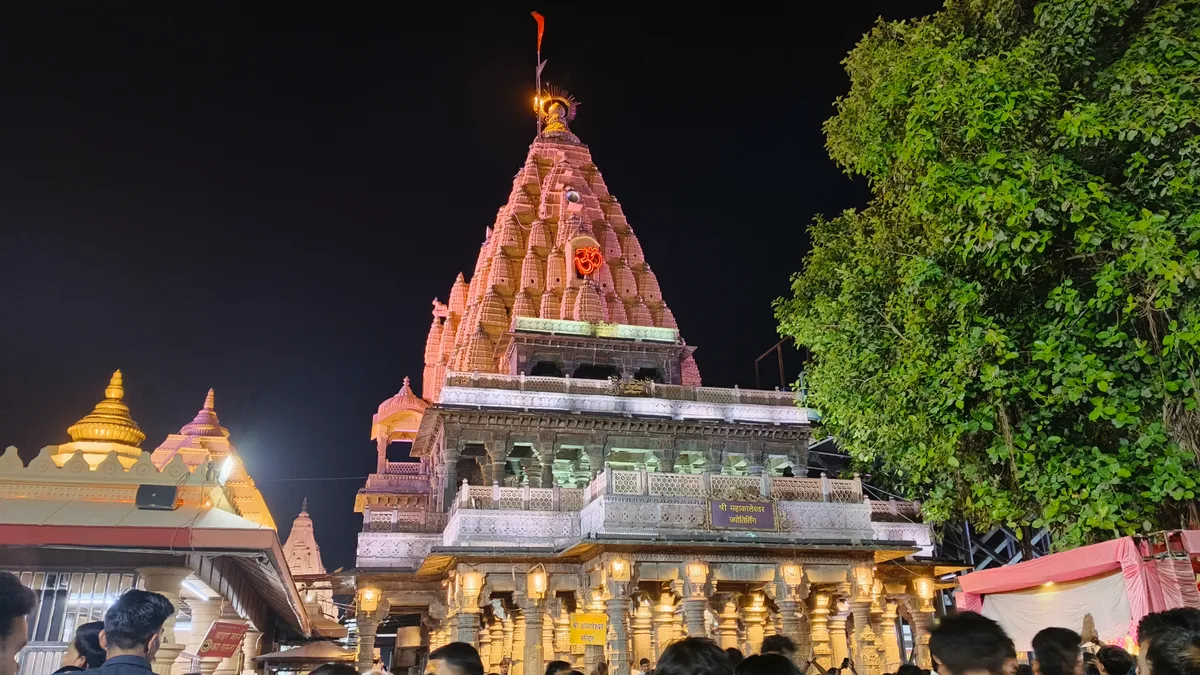
For over 2,000 years, Ujjain (Madhya Pradesh) served as India's prime meridian — the city from which all Indian time was calculated. Ancient Indian astronomers called it Mahakaal — "the Great Time" or "Lord of Time." Even today, the Mahakaaleshwar Jyotirlinga (one of 12) here embodies the concept of time as divine.

📐 Surya Siddhanta Precision

The Surya Siddhanta (c. 400 CE), an ancient Indian astronomical text, calculated the solar year as 365 days, 6 hours, 12 minutes, 36.56 seconds. The modern value is 365d 6h 9m 9.76s. That's an error of just 1 minute 26 seconds — computed 1,600 years ago without instruments.

🌐 The IST Meridian Gap

India's official IST meridian runs through Mirzapur, Uttar Pradesh (82°30′E) — but Ujjain (75°47′E) was the original. The gap is ~6° 43′ of longitude, or approximately 26 minutes 52 seconds of solar time. Ujjain time lags behind official IST by this margin.

🕐 The Concept of Mahakaal

In Sanskrit, Maha = great, Kaal = time/death. Shiva as Mahakaal represents the master of time — beyond time's reach, yet its ruler. The famous 4 AM Bhasma Aarti at Mahakaaleshwar Temple is one of India's most unique rituals: performed with sacred ash before dawn, it marks the transition between Brahma Muhurta and the regular day.

🔢 Ancient Indian Time Units

Paramanu (atom of time) → Truti (29.6 µs) → TatparaNimesha (blink, ~0.2s) → Kashtha (1.6s) → Laghu (16s) → Ghati/Nadika (24 min) → Muhurta (48 min) → Prahara (3h) → Dina (day). The word "minute" as "small time" mirrors the Vedic concept of Anu-Kala.

🏛 Yantrashalas — India's Observatories

Maharaja Jai Singh II built 5 Jantar Mantar observatories across India (Jaipur, Delhi, Mathura, Varanasi, Ujjain) in 1724–1735. The Jaipur Jantar Mantar's Samrat Yantra — the world's largest sundial — can calculate time to an accuracy of 2 seconds. It is a UNESCO World Heritage Site.

Did you know? The Hindi word Kal (कल) means both yesterday AND tomorrow. This is no accident — it reflects the Vedic philosophy that time is circular, not linear. Past and future are mirror images of the same moment. Similarly, Parso (परसों) means both the day before yesterday and the day after tomorrow. Time in Indian philosophy is cyclical — Kaal Chakra (the Wheel of Time) revolves endlessly.

Ghati — घटी

each = 24 minutes exactly

Ancient India's water-clock unit. A copper bowl (Ghati) with a small hole was placed in a vessel of water — the time for it to sink once = 1 Ghati. 60 Ghatis = 1 day. The modern Hindi word ghadi (clock/watch) comes directly from this 3,000-year-old unit.

Muhurta — मुहूर्त

each = 48 minutes · 30 per day

The most-used Vedic unit in daily Hindu life. Each of the 30 Muhurtas has a specific name, ruling deity, and quality. When a pandit says "this is a good muhurta" — he means this precise 48-minute window is cosmically auspicious for the intended activity. The word has entered English as "moment" via Persian.

Prahara — प्रहर

each = 3 hours · 8 per day

Dopahar (दोपहर = noon) literally means "second Prahara" — and this 2,000-year-old word is in everyday modern Hindi. 4 daytime + 4 night Prahars. Each Prahar has a distinct mood, deity, and quality of consciousness. Brahma Muhurta falls in the first Prahar before sunrise.

Pala — पल

each = 24 seconds · 60 per Ghati

The Pala is 1/60th of a Ghati — a subdivision rarely used in daily life but important in jyotish (Vedic astrology) calculations. 60 Palas = 1 Ghati = 24 minutes. 3,600 Palas = 1 day. The word pal (पल) in Hindi still means "a moment" in poetry and song.

🌘 Rahu Kaal & Gulika Kaal

Full city-wise guide →
🌘
Rahu Kaal — Today
Today's window:
आज का राहु काल · नए काम शुरू न करें

Full Week — Rahu Kaal Schedule

🪐 Gulika Kaal (Maandi) — Son of Saturn

Today:

What is Rahu Kaal? A daily 90-minute inauspicious window ruled by Rahu (north lunar node). Traditional Hindus avoid starting any new activity — business launches, travel, marriages, signing contracts, new investments. Rahu Kaal is calculated by dividing daylight hours into 8 equal parts, so exact times vary by latitude and season. The times shown above are for central India (Delhi/Mumbai). Cities like Kolkata see these windows ~30 min earlier; Ahmedabad ~25 min later. See city-specific Rahu Kaal →

🪔 Festival Countdown 2026–27

Live · Auto-updating every minute

📅 India Calendar & Bank Holidays 2026

Full calendar →

🏦 Indian Bank Timings & Saturday Rules

Standard hours: Public sector banks operate 10:00 AM – 4:00 PM IST, Monday to Friday. Most private banks open at 9:30 AM and close at 4:30–5:00 PM. Bank managers' counters may close 30–60 min before branch closing time.

Saturday working — RBI Rule: Banks are open on the 1st, 3rd, and 5th Saturdays of each month (half-day: 10 AM – 2 PM). Banks are closed on 2nd and 4th Saturdays — these are treated as holidays under RBI's 5-day banking week guidelines. When a month has 5 Saturdays, that 5th Saturday is a working day.

✅ Open Saturdays

1st Saturday · 3rd Saturday · 5th Saturday (if applicable)
10:00 AM – 2:00 PM IST · Limited services

🔵 Closed Saturdays

2nd Saturday · 4th Saturday
Gazetted holiday for bank staff under Banking Regulations Act

⚡ Always Available

UPI · IMPS · NEFT · RTGS · ATMs
24×7 including all holidays · Never closed

Cheque clearing: NEFT cleared 24×7. RTGS: 7:30 AM – 4:45 PM on working days. Cheques deposited on closed days are processed the next working day. Loan EMI deductions may still process on bank holidays via NACH mandate — keep sufficient balance always.

Mon
Tue
Wed
Thu
Fri
Sat
Sun
Today
Bank/National Holiday
Festival
Bank Closed (2nd/4th Sat)
Sunday / Weekend

RBI Mandated Bank Holidays 2026 — National + Major State Observances

State-specific holidays: States like Maharashtra, Kerala, Tamil Nadu, West Bengal, and others observe additional regional holidays (e.g. Gudi Padwa in Maharashtra, Onam in Kerala, Durga Puja in WB, Pongal in TN). These may apply to banks in those states even if they are working days nationally. Always check with your specific bank branch for local holiday schedules. The 2nd and 4th Saturdays of every month are bank holidays across India regardless of state.

Today's Panchang — आज का पंचांग

Panchang (पंचांग) = "five limbs": Tithi (lunar day) · Vara (weekday) · Nakshatra (lunar mansion) · Yoga (Sun+Moon combined) · Karana (half-tithi). Values shown are algorithmically calculated approximations. For precise muhurta for marriages, business launches, or other important events, always consult a qualified jyotishi with your birth details.

⏰ Important Indian Timings

All muhurtas →
🌅
Sunrise — सूर्योदय
~5:30 – 6:30 AM Varies
Varies by city and season. Assam: ~5:00 AM · Mumbai: ~6:05 AM · Delhi: ~5:45 AM · Gujarat: ~7:00 AM. Brahma Muhurta begins 1h 36m before sunrise — earliest and most auspicious window.
🙏
Brahma Muhurta Vedic
~4:24 – 5:12 AM
Creator's Hour — the most powerful window for meditation, yoga, study. Approx 1h 36m before sunrise. Mind is at peak clarity. Ayurveda and yoga both strongly recommend waking in this window for optimal health.
☀️
Abhijit Muhurta Vedic
11:48 AM – 12:36 PM
The most auspicious 48-min window of the day — ruled by Abhijit Nakshatra (Vega star). Excellent for new ventures, contracts, important decisions. Lord Krishna was born in this window. Not observed on Wednesdays.
🏦
Bank Hours — बैंक समय
10:00 AM – 4:00 PM
Public sector banks Mon–Fri + 1st/3rd/5th Sat (10 AM–2 PM). Private banks typically 9:30 AM–4:30 PM. Closed 2nd & 4th Saturdays and Sundays. UPI/IMPS/ATM: 24×7 always.
📈
NSE / BSE Markets
9:15 AM – 3:30 PM
Pre-open session 9:00–9:15 AM for price discovery. Regular trading 9:15 AM–3:30 PM IST, Mon–Fri. Closing session 3:40–4:00 PM. MCX commodity until 11:30 PM. F&O expiry: last Thursday of month.
🚆
IRCTC Tatkal Opens
10:00 AM (AC) / 11:00 AM
Tatkal opens 1 day before departure. AC classes (1A, 2A, 3A, CC): 10:00 AM IST. Non-AC (SL, 2S): 11:00 AM IST. Premium Tatkal: dynamic pricing, no quota cap. Keep all passenger details ready 15 min before opening.
🏛️
Government Offices
9:00 AM – 5:30 PM
Central government offices Mon–Fri, 9 AM – 5:30 PM. Lunch: 1:00–1:30 PM. Many state governments shift hours seasonally (especially in North India — earlier in summer). Closed Sundays and all gazetted holidays.
🌇
Sunset — सूर्यास्त
~5:45 – 6:45 PM Varies
Sandhya time (15 min around sunset) is sacred in Hindu tradition. Avoid starting new activities. Good time for evening prayers. Mumbai: ~6:45 PM · Delhi: ~6:30 PM · Kolkata: ~5:45 PM in winter.
✈️
Flight Check-In Cutoff
45 – 75 min before
Domestic flights: 45 min before departure (check-in closes). International: 60–75 min. Web check-in available 24–48 hrs before. Add extra buffer at DEL T3, BOM T2, BLR during peak morning and evening rush hours.

📊 Global Markets in IST

Full market guide →

Status calculated from your browser clock. Does not account for exchange-specific holidays. Dubai/ADX closed Friday–Saturday. NYSE/NASDAQ shift ±1h during US Daylight Saving Time (March–November).

🌐 World Clock — Global Indians

Full world clock →

🏙️ India Cities — All on IST

UTC+5:30 · All 28 states · Same time

⌚ Watches & Time Pieces

Partner placements · Time-related brands
Premium Watch Brands
From Titan and Fastrack to Seiko, Casio, and Swiss luxury — find the perfect timepiece. Whether you're a professional who values precision or a watch enthusiast, the right watch tells more than time.
Explore Watches →
🕰️
Smart Watches & Fitness Bands
Track your time and health simultaneously. The best smartwatches of 2026 for Indians — with IST time sync, UPI payments, and health monitoring that understands Indian lifestyle patterns.
Shop Smart Watches →
🎪
Events & Shows in India
Time-sensitive tickets — concerts, exhibitions, theatre, comedy shows, sporting events. Book before they sell out. Check event timings in IST and never miss a show again.
Browse Events →
🗓️
Productivity & Time Management
Apps, planners, and tools that help India's 500 million working-age adults manage their most precious resource. From Notion to Focusmate, organise your time like a professional.
Explore Tools →

🇮🇳 How India Spends Time — The Numbers

Segments · Habits · Culture · Data
📱 Digital India
7.3h
Average screen time per day
India has the world's highest average smartphone screen time. The top uses: YouTube (27 min/day average), WhatsApp messaging, Instagram Reels, and short-form video. Indians spend more time on phones than sleeping in some age groups.
🚗 Traffic & Commute
90 min
Average daily commute — metro cities
Mumbai, Bengaluru, Delhi, and Hyderabad rank among the world's worst cities for traffic congestion. The average Mumbai office worker spends 90–120 minutes commuting daily. Bengaluru's peak-hour traffic can turn a 10km journey into 1.5 hours. Indians lose an estimated 50+ hours per year to traffic.
📺 Entertainment
3.1h
Daily OTT + TV viewing
Indians consume more online video than any other country by volume. Netflix, Amazon Prime, Disney+ Hotstar, and JioCinema dominate. The average Indian watches 3+ hours of content daily — cricket alone adds 60+ hours per IPL season. Weekend binge-watching is a national tradition.
🧘 Sleep & Rest
6.5h
Average sleep — lower than WHO recommendation
India sleeps later than almost any country — average bedtime is 11:10 PM. The 9–9–6 work culture (9 AM to 9 PM, 6 days a week) in IT/startup sectors has reduced sleep significantly. The traditional Indian concept of Brahma Muhurta (4:24–5:12 AM rising) is increasingly aspirational rather than practised.
🎓 Students
10–14h
Study hours per day — JEE/NEET aspirants
India's 1.5 million JEE and NEET aspirants represent perhaps the world's most intense study culture. Kota (Rajasthan) — India's coaching capital — has students studying 10–14 hours daily for 2+ years. The Indian academic calendar runs April–March, opposite to the global norm, creating unique time zone conflicts for international students.
🕌 Spiritual Practice
24 min
Average daily prayer/puja time
India remains one of the world's most religiously active countries. An estimated 70%+ of Hindus perform daily puja. Morning prayer (6–7 AM), temple visits, Friday namaz, Sunday Mass, and Gurudwara seva — India's spiritual practices are deeply time-structured. Rahu Kaal, Gulika Kaal, and Abhijit Muhurta actively shape when Indians schedule activities.

🤯 India & Time — Fun Facts

Did you know?
📺
500M+
YouTube viewers in India
India is YouTube's largest market by users. Indians watch an average of 40 minutes of YouTube per day. Hindi and regional language content has exploded — Tamil, Telugu, Kannada, Marathi, and Bengali channels each have audiences larger than most European countries.
📱
650M+
WhatsApp users in India
India has more WhatsApp users than any country — over 650 million. Indian families share everything on WhatsApp: morning "Good morning!" messages (sent at 6 AM precisely), Diwali wishes, news (real and fake), and entire family decisions. WhatsApp is effectively India's public square.
🏏
130h
Average Indian watches cricket per year
Cricket stops India. During India vs Pakistan World Cup matches, an estimated 400–500 million people tune in simultaneously — one of the world's largest shared media moments. Office productivity drops measurably on match days. IST match start times (morning World Cup finals) are national events.
🛵
3B+
Zomato/Swiggy deliveries per year
India's food delivery culture is obsessed with time. The "30-minute delivery" promise changed Indian eating habits permanently. Peak order times: 12:30–1:30 PM (lunch) and 8:00–9:30 PM (dinner). The highest-order minute in Indian food delivery history was during IPL final after-match celebrations.
+5:30
One of only 3 half-hour UTC offsets globally
IST (UTC+5:30) is one of only three major half-hour UTC offsets in the world, alongside Iran (UTC+3:30) and Afghanistan (UTC+4:30). India chose 5:30 in 1906 because 5:45 (the natural central India offset) was considered awkward. The decision to use a single timezone for 3.3 million km² remains one of the world's most consequential time decisions.
🌙
11:10 PM
Average Indian bedtime — one of world's latest
India sleeps late — later than China, Japan, the US, and most of Europe. The combination of long working hours, evening family time, and mobile screens has pushed bedtimes later. Yet India's ancient traditions of Brahma Muhurta (pre-dawn rising) and afternoon rest (the Siesta-equivalent — "Takiya Kalam") suggest Indians once lived with the sun.

ℹ️ About Indian Standard Time

भारतीय मानक समय · UTC+5:30

What is IST?

Indian Standard Time (IST) is UTC+5:30 — the single time zone for all 1.4 billion Indians, from Kashmir to Kanyakumari. India never observes DST, making IST one of the few permanent half-hour offset zones worldwide, alongside Iran (UTC+3:30) and Afghanistan (UTC+4:30).

IST vs World

Dubai: 1h 30m behind · Singapore: 2h 30m ahead · London (GMT): 5h 30m behind · New York (EST): 10h 30m behind · Tokyo: 3h 30m ahead · Sydney (AEST): 4h 30m–5h 30m ahead. IST never changes — a reliable anchor for global coordination.

Geographic Span

IST covers Gujarat (68°E) to Arunachal Pradesh (97°E) — a 30° longitude span. Solar noon in Arunachal occurs ~2 hours before Gujarat. Assam sees sunrise at 5:00 AM while Gujarat sees it at 7:00 AM. Yet both show the same clock time.

History — 1906

Before 1906, India had 3 official times: Bombay Time (UTC+4:51), Calcutta Time (UTC+5:54), Madras Time (UTC+5:21). The British unified India to UTC+5:30 in 1906, using Mirzapur, Uttar Pradesh (82°30′E) as the standard meridian — chosen as it bisected the subcontinent.

Why No DST?

India briefly observed DST during WWII (1941–45) and abandoned it permanently. India's tropical latitude gives modest day-length variation (10.5–13.5 hours). Agriculture follows the sun, not the clock. A single timezone already creates enough east-west anomalies within the country.

IST for Business

IST's position is strategically ideal: Indian business hours (9 AM–6 PM IST) overlap with US East Coast afternoon, UK morning, and Gulf hours — the "golden overlap" that built India's $250B+ IT/BPO export industry. Over 5 million Indians work directly in timezone-dependent roles.

❓ Frequently Asked Questions

What is the current time in India right now?

India runs on Indian Standard Time (IST), UTC+5:30. The live clock at the top of this page shows the exact current time, updated every second. India does not observe Daylight Saving Time — IST is fixed year-round, unlike the UK, USA, and Europe which shift clocks seasonally.

Are banks open today in India?

Indian banks follow RBI guidelines: open Monday–Friday (10 AM–4 PM), plus 1st, 3rd, and 5th Saturdays (10 AM–2 PM). Banks are closed on 2nd and 4th Saturdays, all Sundays, and all gazetted holidays (Republic Day, Holi, Good Friday, Independence Day, Diwali, Christmas, etc.). UPI, IMPS, ATMs, and internet banking are available 24×7 even on bank holidays.

What is Rahu Kaal today?

Rahu Kaal for central India: Mon 7:30–9 AM · Tue 3–4:30 PM · Wed 12–1:30 PM · Thu 1:30–3 PM · Fri 10:30 AM–12 PM · Sat 9–10:30 AM · Sun 4:30–6 PM. Traditional practice avoids starting new activities during this period. Exact times vary ±15–30 min by city.

What is Mahakaal and why is Ujjain significant?

Mahakaal (महाकाल) literally means "Great Time" or "Lord of Time" — an aspect of Shiva as the master of temporal existence. Ujjain (Madhya Pradesh) hosted the Mahakaaleshwar Jyotirlinga, one of 12 sacred Shiva shrines. More practically, Ujjain served as India's astronomical prime meridian for 2,000 years. The Surya Siddhanta calculated solar year to within 1 minute 26 seconds — extraordinary for its era.

What time does NSE/BSE open?

NSE and BSE open for regular trading at 9:15 AM IST, Monday–Friday. Pre-open session: 9:00–9:15 AM. Market closes at 3:30 PM IST. MCX commodity futures trade until 11:30 PM. F&O expiry falls on the last Thursday of each month. Markets are closed on all national holidays declared by the exchanges.

What is IST in GMT?

IST is UTC+5:30 — 5 hours 30 minutes ahead of GMT/UTC. When it is 12:00 noon GMT, it is 5:30 PM in India. India permanently maintains this offset year-round with no seasonal changes. The IST reference meridian is 82°30′E, passing through Mirzapur, Uttar Pradesh.

Is time the same across all of India?

Officially yes — all 28 states and 8 union territories use IST (UTC+5:30). But because India spans 30° of longitude, solar time varies by ~2 hours. Arunachal Pradesh sees sunrise at 5:00 AM while Gujarat sees it at 7:00 AM — same clock, very different solar experience. There have been historical proposals for a separate "India Daylight Time" for the northeast, but none have been implemented.

How much time do Indians spend on phones?

India has the world's highest average smartphone screen time — approximately 7.3 hours per day. YouTube (27 min avg daily), WhatsApp, Instagram Reels, and short-form video dominate. India is YouTube's largest market (500M+ users) and has over 650M WhatsApp users. The average Indian's evening phone session begins at approximately 8:30 PM IST and runs until midnight or later.

📤 Share IndiaTime.co.in

Share India's complete time dashboard

📱 WhatsApp 𝕏 Twitter